
Abingdon, VA
Project Profile
A nonprofit senior housing community in Abingdon, Virginia, is installing rooftop solar across its low-income rental apartments and shared community building, cutting utility costs for older residents who live on fixed incomes while reducing the facility’s environmental impact.
Impact Snapshot
- Coal-Impacted
- Clean Energy + Long-Term Utility Savings
- Affordable Housing for Seniors
Background
ElderSpirit Development Corporation is a nonprofit senior housing community in the southwest Virginia town of Abingdon.. Home to a mixed-income population of older adults, ElderSpirit manages a set of low-income rental apartments alongside a common-use building that serves as a gathering place for the entire 42-member community. The surrounding area carries multiple markers of economic distress: it is classified as distressed under the Appalachian Regional Commission framework, designated a CDFI Investment Area, identified as coal-impacted, and rated as having high social vulnerability.
For seniors living on fixed incomes, rising utility costs are a direct threat to housing affordability. As a community, ElderSpirit identified rooftop solar as a way to permanently lower those costs — for its residents and for the organization itself — but faced a common obstacle for small nonprofits pursuing clean energy: the federal incentives that make these projects financially viable arrive only after construction is complete, leaving a gap that conventional lenders are often unwilling or unable to fill. In this case, Elderspirit could not secure financing due to their complicated real estate ownership structure.
IA's Role
The solar installation qualifies for the federal solar Investment Tax Credit plus an Energy Communities bonus credit — together worth 40% of the gross project cost — but those funds are reimbursed only upon tax filing, well after the developer must be paid. Through Invest Appalachia’s Catalytic Capital, ElderSpirit received an unsecured bridge loan to cover upfront construction costs until the project’s federal incentives arrive.
ElderSpirit had already stretched it’s resources to try to fund the project on its own, drawing on internal reserves and a zero-interest loan from one of its board members. IA’s bridge financing filled the remaining gap, ensuring the final payment to the solar developer could be made on time at project completion. Ia’s funding will be repaid in full once ElderSpirit receives its federal tax credit reimbursement. This is exactly the kind of timing gap that stalls community-scale clean energy projects in rural Appalachia — and exactly where flexible capital can make the difference.
Partnership
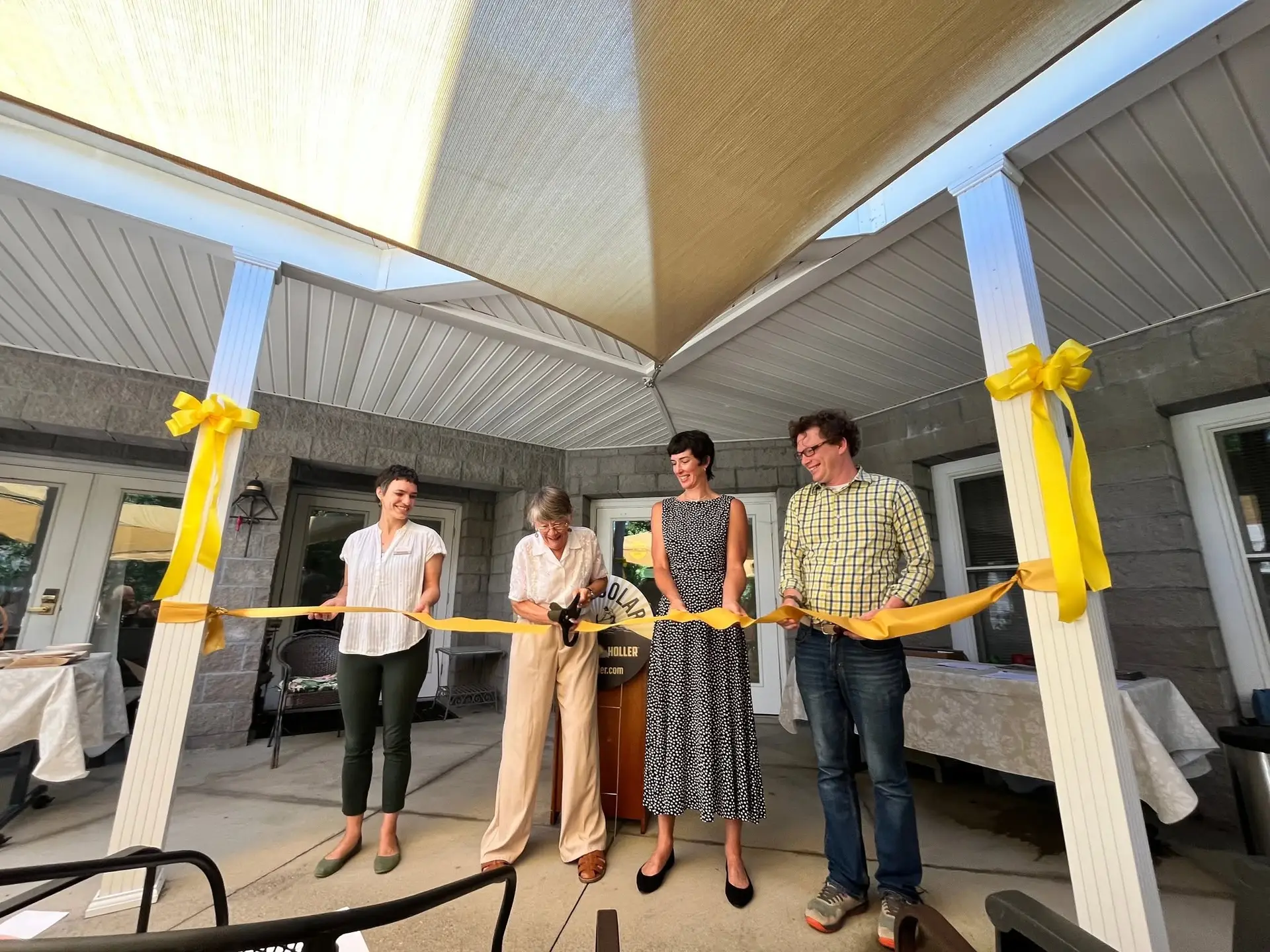
The project is led by ElderSpirit Development Corporation, a community-rooted nonprofit whose own board and reserves provided a substantial share of the upfront financing — a strong signal of local commitment and leadership. The project also reflects the regional ecosystem IA is helping build: the installation was completed by Solar Holler, itself an Invest Appalachia borrower partner — one IA client delivering the work that made another project possible.
Key Outcomes
- Long-term utility cost savings of more than $685,000, directly benefiting 16 apartments currently housing 17 low-income senior residents, plus the common-use building serving the full 42-member community.
- Reduced carbon emissions through on-site renewable energy generation, equal to 435 gasoline cars taken off the road for a year.
- A replicable model for rural clean energy — and a demonstration of Appalachia’s growing clean energy ecosystem, with an IA-backed solar installer business and IA bridge financing working in tandem to serve a community-led project.