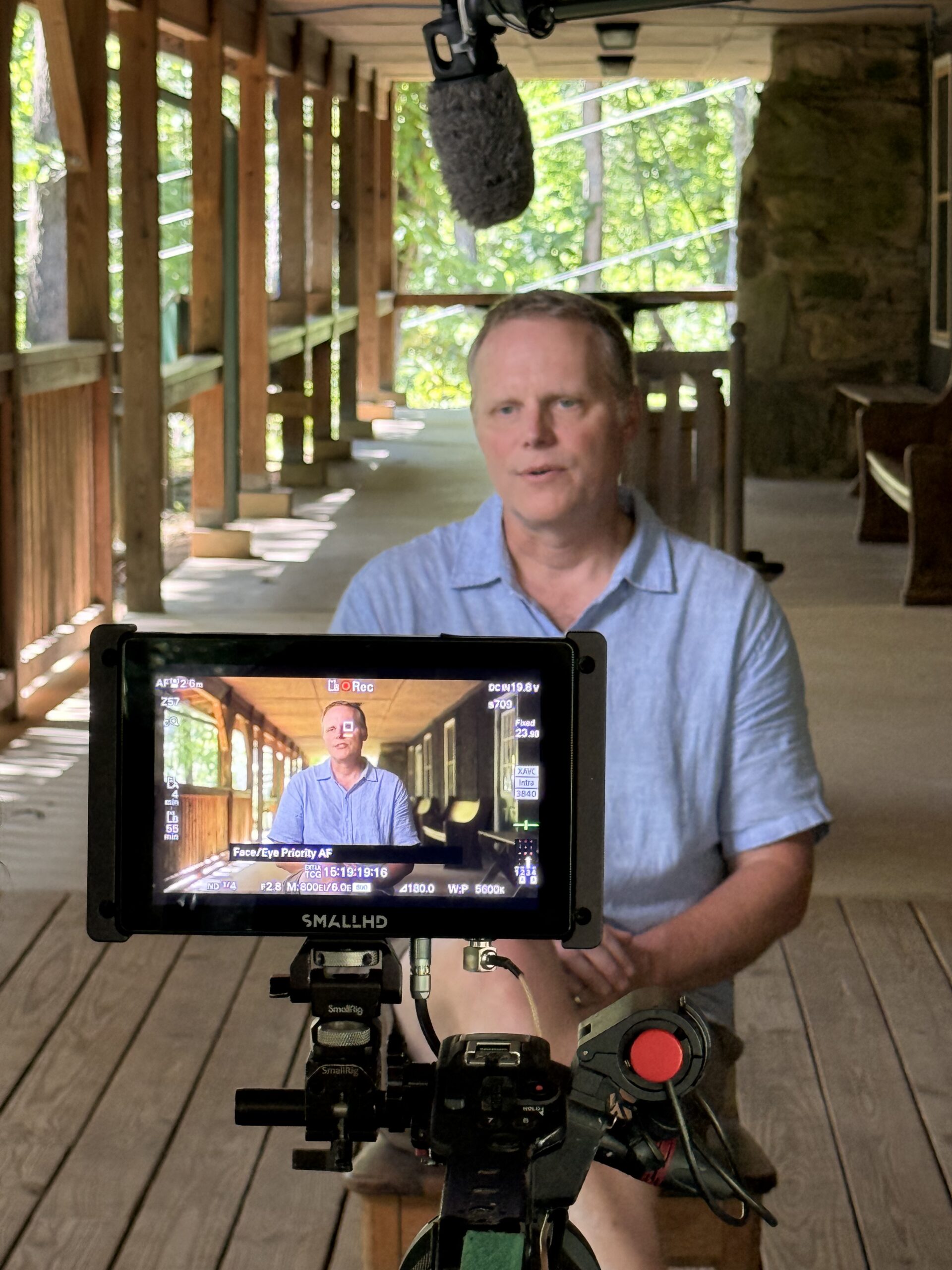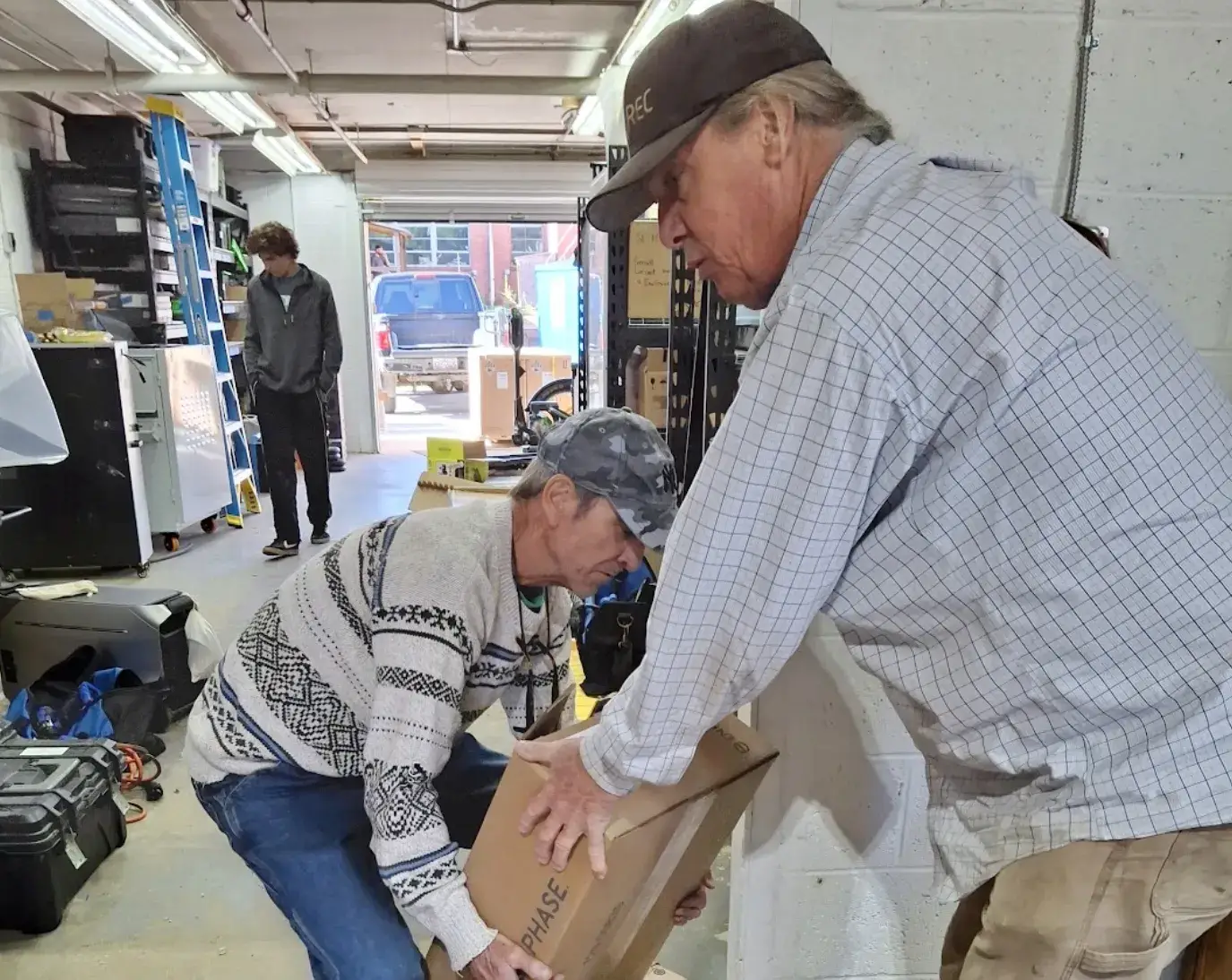
"We’d like to see this be a pilot for us on what scalable microgrid technology could be across all of western North Carolina — and maybe the country.”
Jamie Trowbridge, The Footprint Project
Project Profile
Solar+storage-powered microgrid to provide energy resilience at a volunteer fire station that serves as a Resilience Hub in rural, Hurricane Helene-impacted Yancey County, North Carolina.
Background
In rural Yancey County, where Hurricane Helene’s 2024 floods and landslides made some of their most devastating impacts, the Double Island Volunteer Fire Department was without power for six weeks. Despite that challenge, the department still served as a lifeline to the core community it serves, as well as neighboring communities whose volunteer fire departments sustained terrible damage in the storm. At least four fire departments in Yancey County were destroyed in the storm, and many others lost critical equipment. Double Island stepped up as a hub for rescues while coordinating rebuilding efforts and supply distribution. They also facilitated the housing of out-of-state volunteers who came to support the recovery. Yancey County experienced some of the most prolonged power outages in the region, with many residents remaining without power well into December.
IA's Role
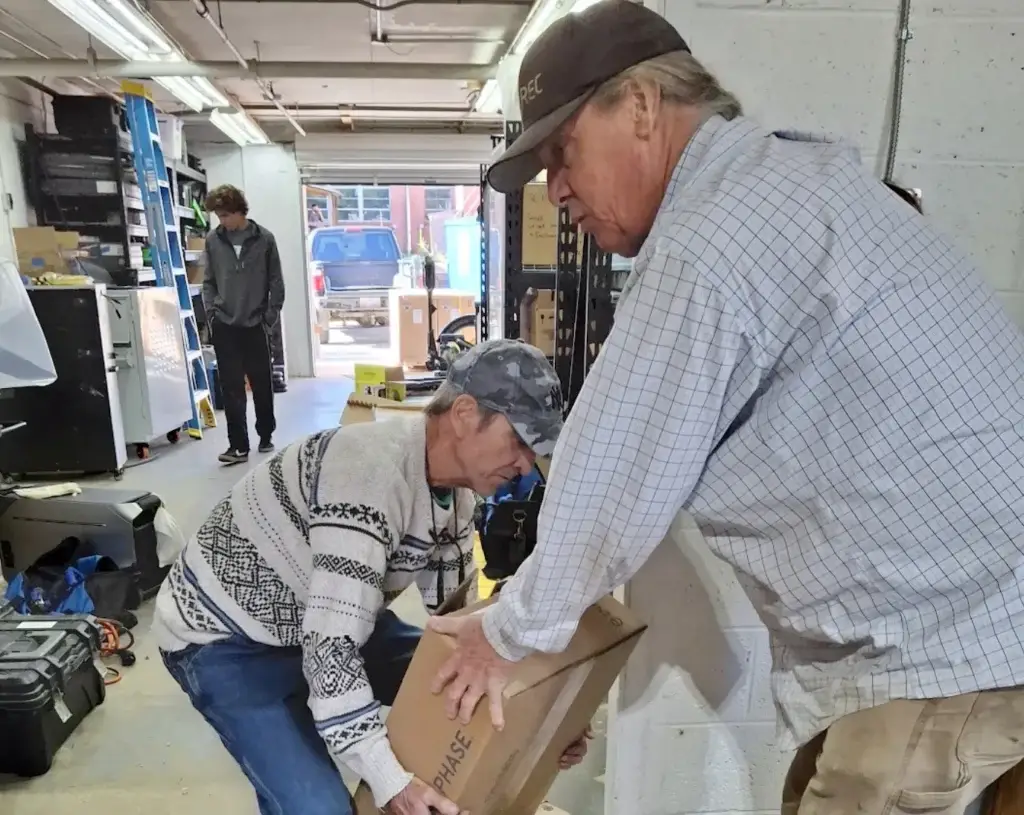
Partner organization Footprint Project secured donated equipment, and Invest Appalachia provided an unsecured 0% recoverable grant that covered the installation cost. The IA investment will be repaid based on utility cost savings – meaning this volunteer-led organization won’t have to pay anything out of pocket. A monthly electric bill savings of $100 will help the fire station stay within its annual operating budget.
Partnership
Double Island VFD is one of dozens of energy resilience projects that have been supported in Helene-impacted WNC through an ongoing partnership between the Footprint Project, the Appalachian Solar Finance Fund at AppVoices, and Invest Appalachia.
Results
Even before Helene, the Double Island Volunteer Fire Department station faced recurrent outages; isolated topography and fragile grid connections left it vulnerable even in an average storm. The new solar and storage setup provides a year-one carbon sequestration equivalent to offsetting 10,262 pounds of CO₂, roughly the same as planting 78 trees and letting them grow for a decade. Since the equipment handover to install a solar microgrid at their main station, Double Island VFD is better prepared for the next crisis. They’re equipped to control temperatures for lifesaving medicine, run essential equipment, and continue delivering the support their community depends on.